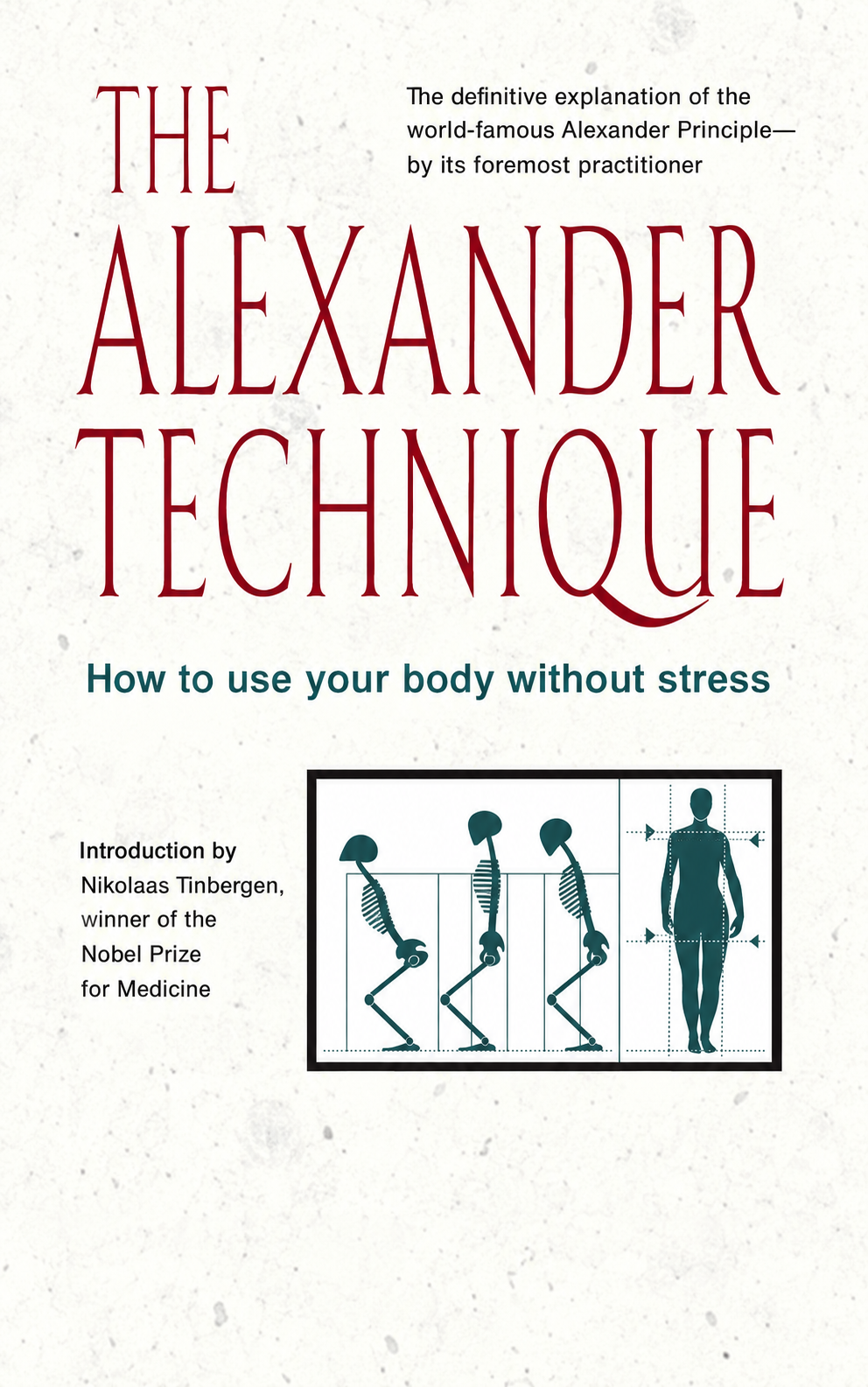
Alexander Technique for Musicians & Performing Artists
Less Unnecessary Tension, Greater Freedom of Expression
“The harder I try to play correctly, the more tense I become. How can I change this?”
A difficult passage is approaching, and the shoulders rise before the fingers have even begun to move. The thought of a high note is accompanied by tension in the throat. Trying to stand “correctly” on stage results in rigidity. Often, these reactions have become so familiar that we begin to consider them a necessary part of our technique.
The Alexander Technique is an educational approach that helps us become aware of how we stand, move, and respond to the demands of an activity. Through this awareness, we explore ways of reducing unnecessary effort and developing greater freedom and choice in the way we act.
For musicians and performing artists, the question is immediately practical: how can I serve my interpretation without adding tension that interferes with what I want to express?
The Moment Before the First Note
An important part of the work concerns what happens before we begin. How do we approach the instrument? What happens as we raise the bow, place our hands on the keyboard, or prepare to sing?
In the Alexander Technique, we learn to create a small pause between our intention and our habitual response. This principle, known as inhibition, allows us the time not to automatically repeat the same pattern of tightening or unnecessary effort.
Then, with the guidance of the teacher, we explore a more coordinated organisation of movement. Particular attention is given to the dynamic relationship between the head, neck, and torso within the functioning of the body as a whole.
For Instrumentalists
“Do I really need to use this much force in order to stay in control?”
The precision required in musical performance can be accompanied by effort in areas that do not actually contribute to playing: a clenched jaw, fixed shoulders, held breath, or unnecessary pressure through the lower back. The Alexander Technique offers a way of exploring these habits while performing a real activity.
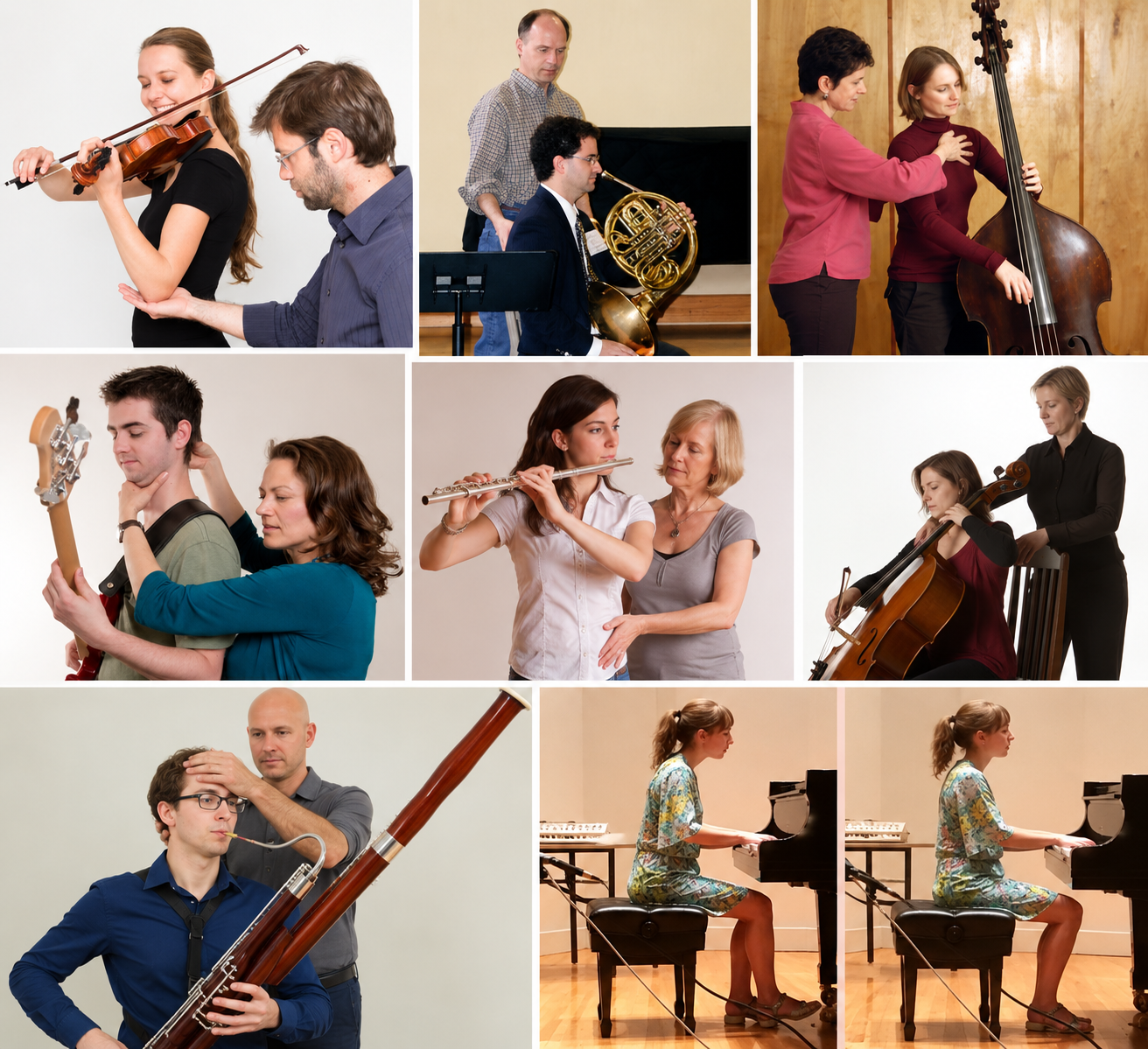
During the lesson, we can work with the instrument itself, observing:
How support is organised while sitting or standing.
How the hands, shoulders, and torso work together.
What changes as speed, intensity, or technical difficulty increases.
When concentration leads to rigidity or breath-holding.
How we approach a difficult passage without preparing for it with excessive tension before it has even begun.
The aim is to broaden our awareness so that, alongside the notes and the sound, we also become aware of how we are playing.
For Singers & Actors
“I’m trying to support my voice, but I end up holding my entire body.”
The Alexander Technique invites performers to notice how preparing to produce sound affects the neck, jaw, ribcage, and overall organisation of the body. We explore when the desire for greater volume, clarity, or expressiveness becomes accompanied by unnecessary tension.
Through simple activities — speaking, singing, walking, and changing position — we explore greater coordination between voice and movement. This work complements vocal and acting training without imposing a rigid posture or a prescribed way of breathing.
For opera singers, this exploration becomes particularly relevant: How do I turn towards another performer? How do I move in costume? How do I respond to the dramatic action while remaining connected to the technical points of reference that support my singing?
On Stage, When the Pressure Increases
“As soon as people are watching me, I start controlling every movement I make.”
Being exposed on stage can intensify habits that are already present in the practice room. A musician may try to secure the desired result by tightening more, restricting movement, or constantly monitoring themselves.
The Alexander Technique provides a practical space in which to work with these responses: recognising the moment when we react automatically, allowing some space before continuing, and returning to the activity with broader awareness.
It can therefore become one of the tools incorporated into performance preparation and the management of performance-related tension.
What Happens in a Lesson?
The teacher uses verbal guidance and, with the student’s consent, gentle hands-on guidance. The work may include everyday movements such as sitting, standing, and walking, as well as activities directly related to the student’s artistic practice.
The focus is on learning: recognising habitual patterns and experimenting with different ways of organising movement and response. Over time, this awareness can be transferred into individual practice, rehearsals, and performance.
Wellbeing Within Everyday Artistic Practice
For someone who may practise and perform for many years, it is valuable to recognise when effort is serving an artistic purpose and when it has become an unnecessary burden. The Alexander Technique develops this awareness as part of everyday artistic practice.
As an educational approach, it complements artistic training. Where pain or persistent vocal difficulties are present, appropriate assessment by a qualified healthcare or voice professional should also be sought.
We learn to prepare for action with greater awareness, allowing effort to serve the music and creating more space for freedom, movement, and expression.